


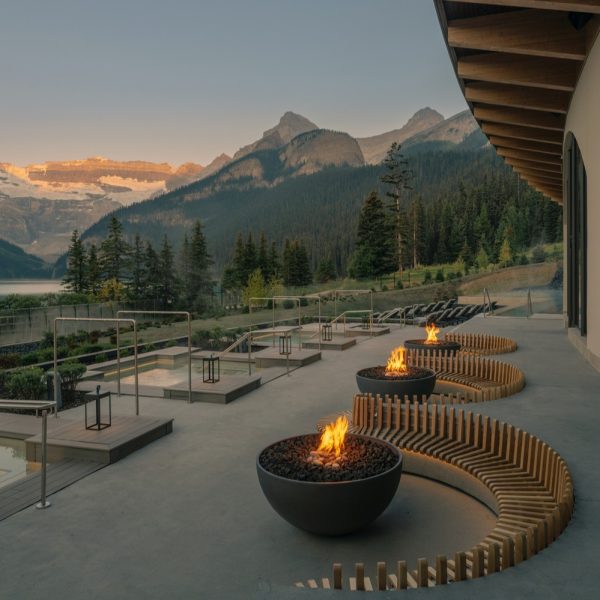
A hotel fire feature is often judged in the first ten seconds: the flame height, the silhouette, the way it anchors a pool deck or arrival court after dark. But luxury hotel fire features are not decorative moments alone. They are public-facing gas appliances expected to operate predictably through heavy use, variable weather, cleaning routines, guest traffic, and the scrutiny of owners, insurers, and facilities teams.
That changes how they should be selected. A statement fire table that looks compelling in a rendering but is difficult to service, poorly suited to the climate, or unsupported after installation creates operational exposure. The strongest hospitality projects treat fire as both an architectural element and a long-term building component.
Start With the Guest Experience, Then Specify for Reality
Fire adds a natural center of gravity to hospitality spaces. At a rooftop lounge, it can define intimate seating zones without closing off views. Around a pool, it extends the perceived use of the deck beyond daylight hours. At an entry, a paired fire feature can establish a deliberate arrival sequence before a guest reaches the lobby.
The design question is not simply where a flame will look dramatic. It is how guests will occupy the space around it. A low, broad fire table encourages conversation and gives a terrace a residential sense of comfort. A taller firebowl creates a stronger visual marker across a large landscape but should not interrupt sightlines from dining tables, guest rooms, or key circulation routes.
Scale matters. A fire feature that appears substantial in isolation can feel undersized against a resort facade or expansive pool. Conversely, an oversized piece can crowd the furnishing plan and create unwanted heat near seating. Establish the desired viewing distance, circulation clearances, furniture layout, and wind exposure before committing to a form or burner size.
Luxury Hotel Fire Features Need Certified Appliances
In a residence, a fire feature may operate intermittently and be overseen by its owner. In a hotel, it can be used nightly by hundreds of guests who have no familiarity with the equipment. The appliance must therefore be selected on safety, certification, and serviceability before its finish or media is considered.
Specify a CSA-certified gas appliance appropriate to the intended installation and fuel source. Certification indicates that the appliance has been evaluated against applicable safety standards, rather than relying on a burner assembly assembled without a defined performance basis. For commercial and hospitality work, this distinction supports permitting, inspection, insurance discussions, and operator confidence.
Burner performance deserves equal attention. Flames should distribute evenly and remain stable in expected site conditions. The ignition and flame-sensing components must be accessible for qualified service, while controls need to suit the operating model. A staff-managed terrace may require a different control approach than a private guest amenity deck with restricted activation.
The responsible party for gas connections, electrical work, ventilation requirements, shutoffs, and commissioning should be defined early. A fire feature is only as dependable as the installation around it. Coordination between the manufacturer, landscape architect, architect, mechanical consultant, gas contractor, electrical contractor, and general contractor prevents the common late-stage problem of having a finished hardscape but no viable route for utilities or service access.
Design for Wind, Not Just the Calm Rendering
Wind is one of the most consequential site variables for exterior fire. Rooftops, waterfront properties, and elevated terraces can experience conditions far beyond what is apparent during a site visit. High winds can affect flame appearance, guest comfort, heat distribution, and operating decisions.
This does not mean every exposed setting needs to abandon fire. It means the design must account for it. Building massing, parapets, planting, screens, and seating placement can reduce direct exposure without turning the feature into an enclosure. In some cases, a lower profile fire table is the more practical choice than a tall bowl. The right decision depends on the site, local code requirements, and how consistently the hotel intends to operate the feature.
Material Performance Is Part of the Luxury Experience
Concrete remains a natural material for contemporary hospitality fire features because it has visual weight, quiet texture, and the ability to hold a clean architectural profile. Yet not all concrete construction performs the same way outdoors.
For freeze-thaw climates, coastal properties, and demanding public environments, the material should resist moisture intrusion rather than merely conceal it with a surface treatment. Non-porous poured UHPC, not layered GFRC, offers a materially different construction approach. Its dense composition and structural integrity are designed to withstand the cycles of moisture, freezing, heat, and use that can degrade lesser exterior assemblies over time.
This is not a purely technical consideration. Surface cracking, delamination, staining, and finish inconsistency are visible failures in a hospitality setting. They interrupt the calm, considered atmosphere a luxury property is trying to create and can force disruptive maintenance in guest-facing areas.
The desired color also needs to be evaluated honestly. Dark finishes can create strong contrast against pale stone, water, or planting, but may show dust, mineral residue, and sunscreen more readily. Lighter colors can feel integrated in bright resort settings but may require careful coordination with adjacent paving. A material sample should be reviewed in the actual project light, alongside the furniture, stone, and planting palette, rather than selected under showroom lighting alone.
Plan Service Access Before the Pavers Are Installed
The most expensive service issue is often not a failed component. It is a component that cannot be reached without removing finished construction.
Every hospitality fire feature needs a practical route to its controls, ignition system, gas connections, and serviceable burner components. This may involve a discreet access panel, a removable top assembly, or a planned maintenance zone beneath adjacent decking. The solution must respect the visual intent while allowing qualified technicians to work without damaging the surround.
Procurement teams should also ask what happens after turnover. Are replacement parts identifiable? Is the manufacturer accountable for the appliance it supplies? Is there a clear warranty for the concrete body and burner? A long warranty has real value only when it is attached to a manufacturer with the technical knowledge and capacity to support the installation years after opening.
For example, Solus Decor supports its firebowls with a 10-year warranty and its burners with a 25-year warranty, pairing handcast UHPC forms with CSA-certified, bench-tested appliances. For a hotel operator, that kind of defined product responsibility is not an abstract benefit. It reduces uncertainty when a feature is part of a high-visibility guest space.
Make Fire Features Operable for the People Who Run the Hotel
A beautiful feature that requires a specialized explanation every evening will not be used as intended. Operating procedures should be proportionate to the property. Some hotels have dedicated engineering staff and can manage more involved systems. Others need straightforward start-up, shutdown, inspection, and cleaning routines that trained front-of-house or facilities personnel can follow.
Written handover documentation should cover normal operation, weather-related restrictions, cleaning methods, seasonal shutdown, and the process for reporting a fault. The fire media should be selected with housekeeping in mind as well. Its appearance matters, but so do its stability, ease of cleaning, and compatibility with the burner system.
The goal is controlled consistency. Guests should encounter a composed flame, clean surfaces, and comfortable seating every time the amenity is open. That reliability is what turns fire from a one-time design gesture into a defining part of the property experience.
When specifying a fire feature for hospitality, insist on the same rigor expected of any other permanent architectural element. The right form can create an unforgettable evening setting. The right material, certified appliance, installation plan, and manufacturer support ensure it continues to do so long after opening night.
Have any questions?
Get in contact with the sales team to find out more about our products
or ask us in the chat at lower right of this screen.
Up Next

Sunday Times, November 2018
November 27, 2018

English Garden, August 2017
August 9, 2017
Dwell Magazine Online
November 28, 2016

LA Times
June 14, 2016

Salone LLC
August 7, 2026