


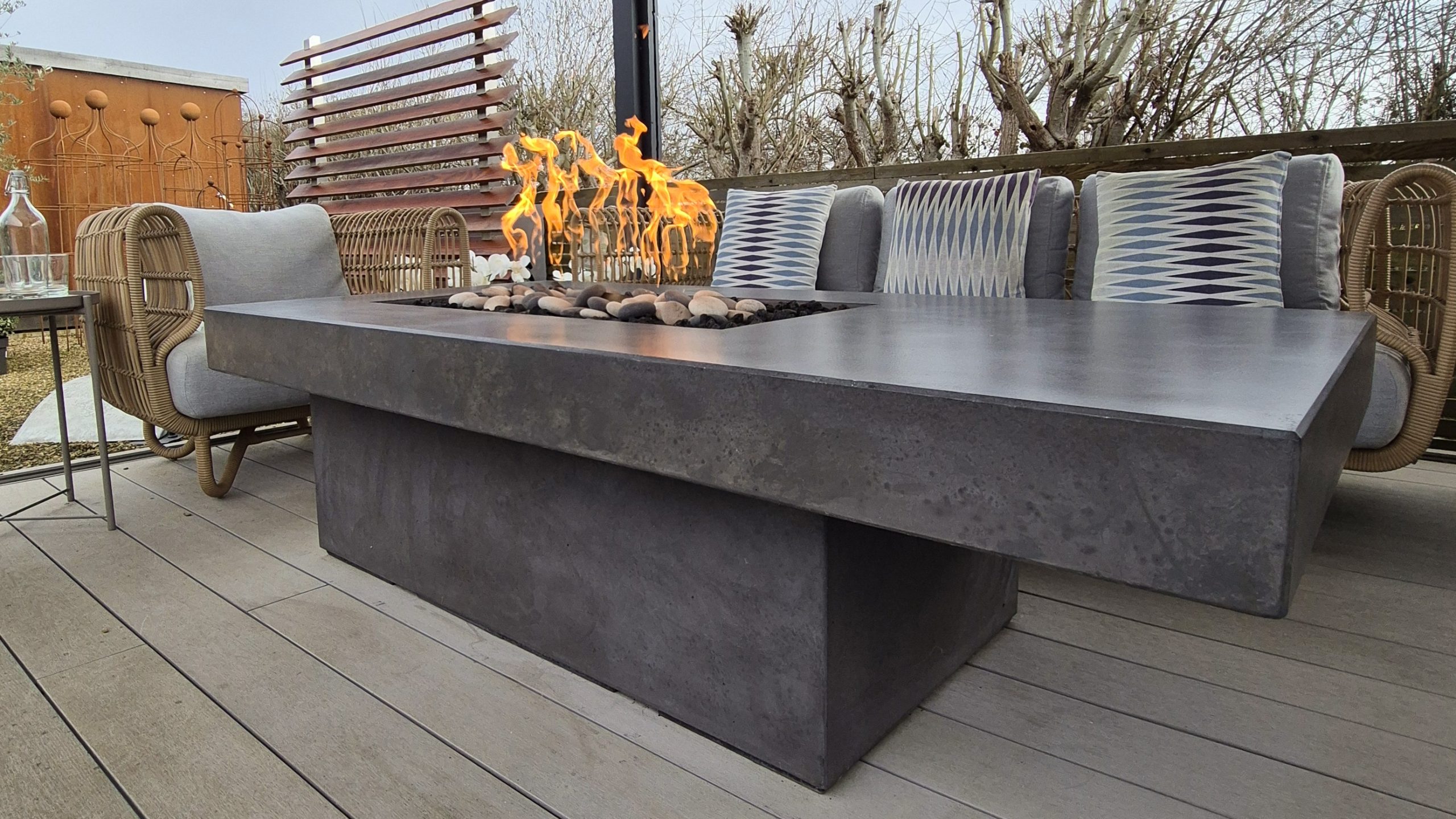
A modern outdoor fire bowl is rarely a minor finishing touch. Set at the edge of a pool, within a formal courtyard, or as the focal point of a hospitality terrace, it establishes a visual center long before it is lit. The right piece brings warmth, proportion, and material presence to the landscape. The wrong one can introduce safety concerns, premature surface deterioration, and an installation problem that becomes expensive to correct.
For a high-end residential or commercial project, selection should begin with more than shape and flame height. The fire bowl must perform as an architectural object and as a certified gas appliance, through changing weather, repeated use, and years of exposure.
Start With the Role of the Fire Bowl
A fire bowl can serve as a sculptural anchor, a destination within a larger outdoor room, or a repeated element that gives a property rhythm. Its intended role determines the appropriate scale, fuel configuration, and placement.
A single large bowl works well where the landscape needs a clear focal point: at the end of a sightline, beside an entry court, or across from a primary seating area. Paired fire bowls can frame a pool axis, stair landing, or water feature. On commercial terraces and resort properties, multiple bowls may define circulation while adding warmth without blocking views.
Scale is not only about diameter. Consider the overall mass of the bowl against retaining walls, furniture, planting, and adjacent architecture. A low, broad form often feels grounded in a contemporary landscape. A taller profile can create more visual presence but must be placed with greater care around seating, wind exposure, and finished surfaces.
The flame should support the setting rather than overpower it. A dramatic burner can suit an open pool deck or expansive courtyard. In a more intimate lounge area, controllable heat and a balanced flame pattern generally matter more than maximum output.
Concrete Must Be Built for Exterior Exposure
Concrete fire bowls are frequently specified for their monolithic appearance, substantial weight, and compatibility with modern architecture. Yet concrete is not a single material category. Its formulation and method of construction directly affect long-term performance.
For freeze-thaw climates, coastal conditions, and high-use commercial environments, the key distinction is between poured Ultra High Performance Concrete and layered GFRC. UHPC, not GFRC, provides a dense, non-porous concrete body engineered for demanding exterior applications. It is cast as a complete form rather than built up in layers, reducing the vulnerabilities associated with delamination and moisture intrusion.
That distinction has practical consequences. Water entering a more porous or layered material can create stress during freeze-thaw cycles. Salts, standing water, and repeated thermal movement place further demands on the finish and structure. A fire bowl may look comparable on delivery day, but its performance after several winters is the standard that matters.
Handcast concrete also carries natural variation. Subtle tonal shifts, small air voids, and the character of the cast are part of an authentic material finish, not defects to be concealed with a plastic-like coating. The objective is a refined architectural surface with the density and structural integrity to age appropriately outdoors.
Treat the Burner as an Appliance, Not an Accessory
The visible flame is only one part of the fire feature. Beneath it are the burner, gas connections, ignition components, controls, media, ventilation requirements, and enclosure details. Each must be selected and installed as part of a complete appliance system.
A properly specified fire bowl should use a CSA-certified gas appliance that has been bench-tested for its intended configuration. Certification helps establish that critical operating conditions have been evaluated, including burner performance, ignition, and the relationship between the appliance and its enclosure. This is especially significant for builders, designers, and hospitality operators managing safety, code compliance, and liability.
Fuel type affects both installation planning and ownership. Natural gas is often the preferred choice for permanent, frequently used installations because it provides a continuous supply through a properly sized gas line. Propane can be appropriate where a gas connection is unavailable, but it requires a considered solution for tank storage, access, ventilation, and replacement logistics.
Do not select a bowl and burner independently without confirming their compatibility. The surrounding concrete vessel, burner pan, media depth, drainage, and air movement are all connected. A manufacturer that owns the complete fire appliance system is accountable for performance in a way that a collection of unrelated components is not.
Controls Should Match How the Space Is Used
Manual key valves may suit a private setting where the fire feature is supervised and used occasionally. Electronic ignition systems offer another level of convenience and can support remote operation or integration into broader landscape controls, depending on the specified system.
For commercial applications, controls should be considered alongside operating procedures. Who starts the feature? Who monitors it? What happens during a power interruption, a weather event, or an extended seasonal closure? These are operational questions, not merely finish-selection details.
Plan the Site Before the Fire Bowl Arrives
A modern outdoor fire bowl is substantial, and the installation should be coordinated before finishes are complete. This is where early collaboration between the landscape architect, builder, gas contractor, electrician, and manufacturer protects both the design intent and the schedule.
The supporting surface must be level, stable, and capable of carrying the bowl’s weight. Confirm whether the feature will sit on a slab, pedestal, masonry base, or engineered deck structure. A bowl placed on an inadequately prepared surface can settle out of level, affecting both its appearance and drainage.
Gas and electrical rough-ins need exact locations, not approximations. Access for shutoff valves, electrical components, service, and future inspection should remain available after installation. If the bowl is part of a pool environment, coordinate all work with pool equipment, bonding requirements, deck drainage, and local authority requirements.
Clearances deserve equal attention. Keep the appliance away from combustible materials, overhanging structures, glazing that may be affected by heat, and areas where wind can push flame toward occupants. Manufacturer instructions and local code establish the baseline, but site conditions should guide the final placement.
Drainage Is a Performance Detail
A fire bowl is exposed to rain, irrigation, snow, and debris. The fire media and burner assembly must not become a basin for standing water. Proper drainage within the appliance and beneath the bowl helps preserve reliable operation and reduces the chance of water-related service issues.
This is particularly relevant where hardscape is designed with tight, minimal slopes. A clean visual plane is desirable, but water still needs a path away from the fire feature. Coordinate drainage early rather than trying to solve it after the bowl is set in place.
Specify for the Climate and the Warranty
Durability claims should be supported by material construction, appliance certification, and written warranty coverage. A premium fire bowl is a long-term landscape investment, so the warranty should reflect confidence in both the concrete form and the burner system.
Ask what the warranty covers, how long coverage lasts, and who provides support if an issue arises after installation. Separate warranties for the concrete vessel and burner components are common because they are distinct systems. A 10-year fire bowl warranty and a 25-year burner warranty, for example, signal that the manufacturer stands behind the structural form as well as the core fire technology.
Ownership also includes maintenance. Fire media should be kept clear of leaves and debris. Burner ports and ignition components need periodic inspection. In regions with severe winter conditions, follow the manufacturer’s seasonal care instructions and use a fitted cover when appropriate. A cover protects the feature from debris and moisture, but it is not a substitute for proper drainage or an engineered exterior material.
Choose a Manufacturer That Owns the Details
The best fire bowl programs are not defined by a catalog image alone. They provide clear technical information, certified appliances, finish samples, installation guidance, and an informed point of contact when site conditions become more complex than the drawings suggest.
For projects requiring a refined concrete form and accountable fire performance, Solus Decor produces handcast UHPC fire bowls in British Columbia with appliance systems designed for architectural use. That manufacturing control matters when a feature must arrive with the correct finish, burner configuration, documentation, and support behind it.
A fire bowl earns its place in a landscape by doing more than creating a flame. Specify one that is proportioned to the architecture, engineered for the climate, and supported for the full life of the installation. The result is not simply a warmer outdoor space, but a feature that continues to look intentional after the first season has passed.
Have any questions?
Get in contact with the sales team to find out more about our products
or ask us in the chat at lower right of this screen.
Up Next

Sunday Times, November 2018
November 27, 2018

English Garden, August 2017
August 9, 2017
Dwell Magazine Online
November 28, 2016

LA Times
June 14, 2016

Salone LLC
August 7, 2026