


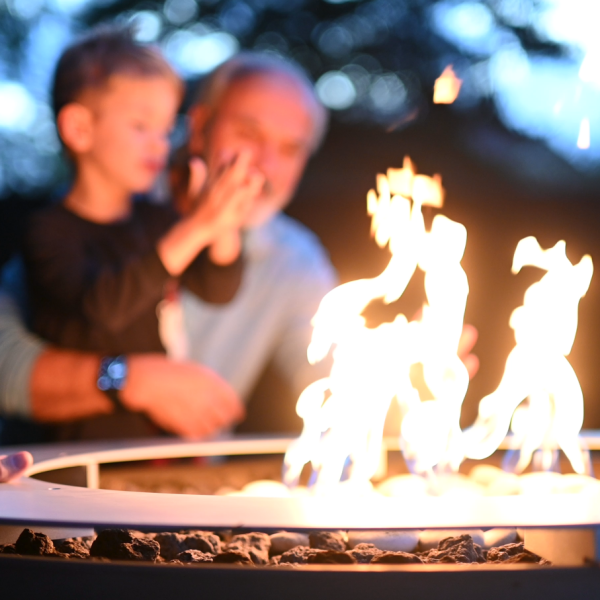
A fire feature should make an outdoor setting feel more composed, not introduce uncertainty after dusk. Gas fire pit safety is established long before the first ignition: in the appliance certification, the site plan, the gas connection, the selected materials, and the operating habits expected of everyone using the space.
For a private terrace, a rooftop amenity, or a hospitality courtyard, the standard is the same. A modern fire feature must be specified as a complete, tested appliance and installed according to its documented requirements. Visual impact matters, but it cannot substitute for clearances, ventilation, fuel-system integrity, or accountable installation.
Gas Fire Pit Safety Starts With a Certified Appliance
A gas fire pit is not simply a vessel containing flame. It is a fuel-burning appliance with a burner, ignition system, gas controls, media, enclosure requirements, and defined operating limits. Those components are engineered to work together. Changing the burner, adding unapproved media, or modifying a control arrangement can alter combustion performance and create a safety issue.
For North American projects, look for an appliance certified for the intended fuel and application by a recognized testing body. Certification confirms that the assembly has been evaluated against applicable safety standards, including combustion behavior, ignition, construction, and controls. It also gives the installer and authority having jurisdiction a documented basis for review.
This distinction carries real weight on architecturally significant projects. A poured concrete firebowl can be sculptural, but its value as a fire feature depends on the appliance inside it being properly designed, certified, and bench-tested. Premium construction should be both material-deep and operationally accountable.
Fuel type must also be confirmed at specification stage. Natural gas and propane require different burner configurations and supply considerations. A natural gas burner connected to propane, or the reverse, is not an interchangeable condition. The result may be an unstable flame, incomplete combustion, excessive heat, or equipment damage. Use only the fuel identified on the appliance rating plate and installation documentation.
Plan Clearances Before the Fire Feature Arrives
Clearances are not a final-installation detail. They influence where a fire feature belongs in the landscape or architectural plan. The product documentation will identify required separation from structures, furnishings, vegetation, overhangs, doors, windows, combustible surfaces, and other site elements. Those dimensions are specific to the appliance and must not be replaced with assumptions based on a similar-looking product.
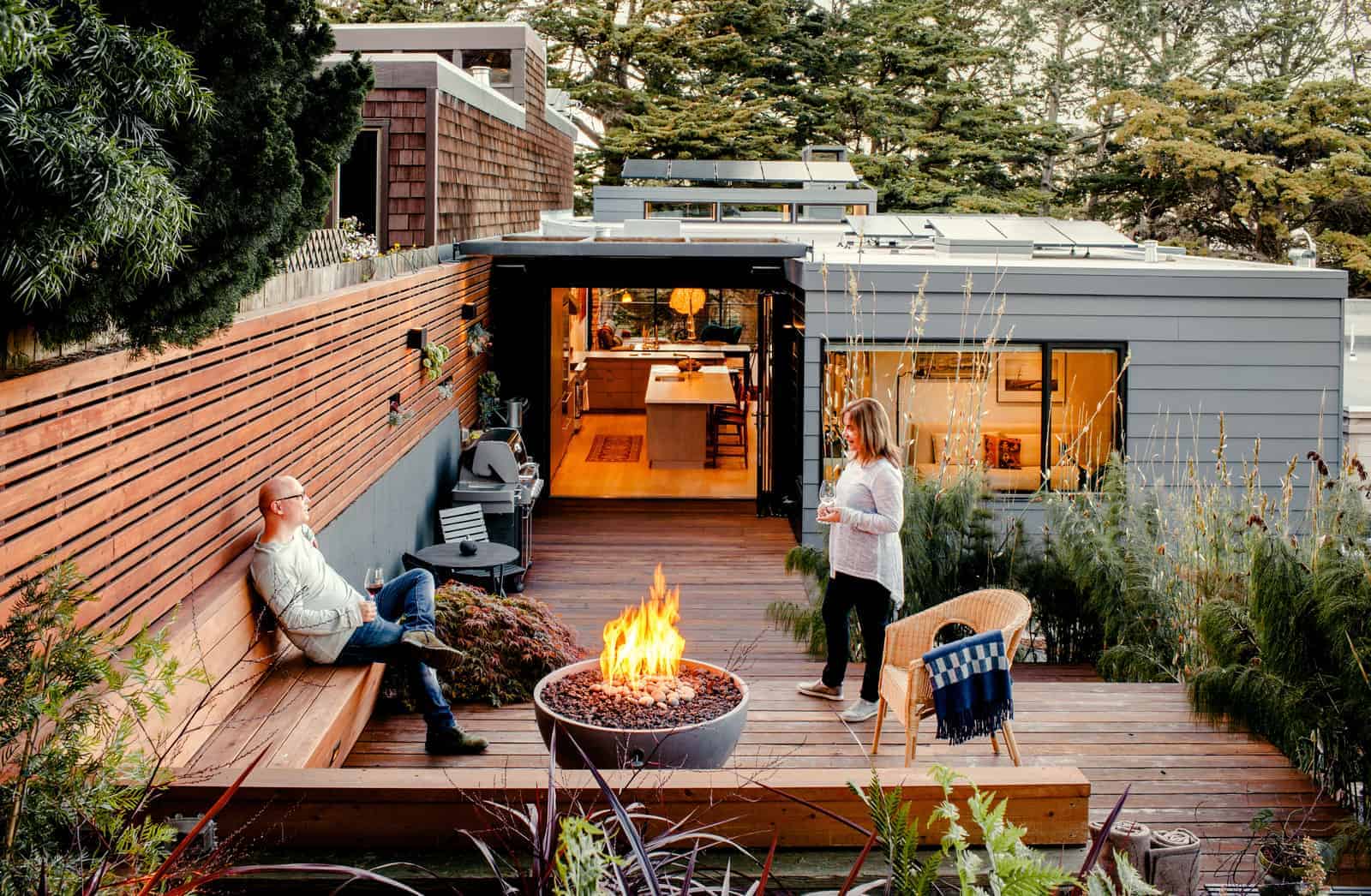
Open sky above the burner is usually essential. An overhead roof, pergola, balcony, canopy, or tree canopy can trap heat and combustion byproducts, even when the area appears open from the side. A covered outdoor room may be appropriate only when the appliance is expressly approved for that environment and the documented ventilation conditions are met.
The same discipline applies below and around the feature. A fire pit should sit on a stable, level, non-combustible foundation sized to support its full weight. This is especially relevant for large-format concrete forms, which are substantial architectural objects rather than lightweight patio accessories. Settlement, rocking, or uneven bearing can affect both the appearance of the installation and the integrity of gas connections.
Consider circulation as carefully as flame visibility. Guests should not need to pass tightly beside the burner to enter a seating area, and loose cushions, throws, umbrellas, or decorative objects should remain outside the appliance’s prescribed zone. In commercial settings, layouts should account for staff service paths, accessible routes, and the unpredictable movement of guests.
Installation Is a Life-Safety Scope
The gas line, shutoff, regulator where required, electrical connection, and final commissioning should be completed by qualified trades in accordance with local code and the manufacturer’s instructions. This is where a well-designed feature either becomes a reliable long-term installation or a source of recurring problems.
A dedicated, accessible gas shutoff is fundamental. It allows the fuel supply to be isolated for service, seasonal shutdown, or an unexpected issue. The line must be correctly sized for the appliance’s BTU demand and the length of the run. An undersized supply can lead to weak or inconsistent flame performance; a poor connection can create a leak hazard.
Before handover, the installer should pressure-test and leak-test the system using an approved method, verify ignition and flame adjustment, and confirm that the burner media has been installed as specified. The owner or site operator should receive the operating instructions, rating information, warranty documentation, and a clear explanation of how to turn the appliance off at both the controls and the gas supply.
For hospitality, multi-residential, and public-facing properties, assign operational ownership. Someone should be responsible for daily visual checks, opening and closing procedures, and escalation if the appliance does not operate normally. Safety is weaker when every team assumes someone else is managing it.
Safe Operation Requires Simple, Consistent Habits
Before lighting the fire feature, inspect the burner area. Remove leaves, paper, accumulated debris, standing water, and any items placed on or near the appliance. Confirm that burner ports are clear and that the fire media has not shifted into a position that obstructs ignition or flame flow.
If you smell gas, do not ignite the appliance or operate electrical switches nearby. Turn off the gas supply if it is safe to do so, move people away from the area, and contact a qualified gas professional or emergency service as appropriate. Gas odor is not a condition to troubleshoot by repeatedly attempting ignition.
Once operating, supervise the fire feature. Do not allow children or pets close enough to touch hot concrete, metal components, or flame media. A concrete surround can retain heat after shutdown, particularly following extended use. Guests should understand that a low, controlled flame is still an open flame, and the feature is not a surface for drinks, food, feet, or decorative objects.
Wind deserves judgment rather than a fixed rule of thumb. A light breeze may have little effect in an open setting, while strong or shifting wind can push flame beyond its normal pattern, reduce comfort, and carry heat toward nearby materials. Shut the appliance down if conditions create abnormal flame behavior. The right decision is not always to keep the gathering going.
Care, Weather, and Material Performance
Outdoor fire features face heat cycles, rain, snow, salt air, freeze-thaw exposure, and the occasional enthusiastic guest. Material quality therefore has a direct relationship to long-term safety and appearance. Dense, non-porous poured concrete made with Ultra High Performance Concrete offers a more resilient approach than layered GFRC construction in demanding climates, particularly where moisture and repeated freezing are part of the ownership reality.
Even durable materials need informed care. Keep drainage paths clear and avoid allowing water to collect in the burner pan or around controls. Follow the manufacturer’s guidance for seasonal protection and cleaning. Never use harsh cleaners, pressure washing at close range, or unapproved sealants that could damage finishes, interfere with drainage, or leave residues near the burner.
At least once each season, inspect the appliance for changes: corrosion at fittings, cracked or damaged ignition components, loose media, blocked burner ports, unstable flame, or evidence of water intrusion. Schedule qualified service when something looks different or performance changes. A yellow, sooty, lifting, or uneven flame is a reason to stop and investigate, not an aesthetic variation to ignore.
Design Confidence Comes From Defined Responsibility
The most successful installations make safety feel integrated rather than added on. The fire feature sits at the correct distance from architecture and planting. Its gas and electrical infrastructure are planned early. Its concrete body is selected for the climate. Its burner is certified, its installer is qualified, and its operator understands the controls.
That level of coordination protects more than the project schedule. It preserves the calm, generous experience that a well-proportioned fire feature is meant to create. Solus Decor approaches fire features as architectural appliances: engineered for the setting, supported through installation, and built for many seasons of confident use.
When reviewing a proposed fire feature, ask for the installation requirements before approving the form, finish, or seating layout. That one decision keeps the conversation anchored in performance, accountability, and the kind of outdoor experience worth gathering around.
Have any questions?
Get in contact with the sales team to find out more about our products
or ask us in the chat at lower right of this screen.
Up Next

Sunday Times, November 2018
November 27, 2018

English Garden, August 2017
August 9, 2017
Dwell Magazine Online
November 28, 2016

LA Times
June 14, 2016

Salone LLC
August 7, 2026