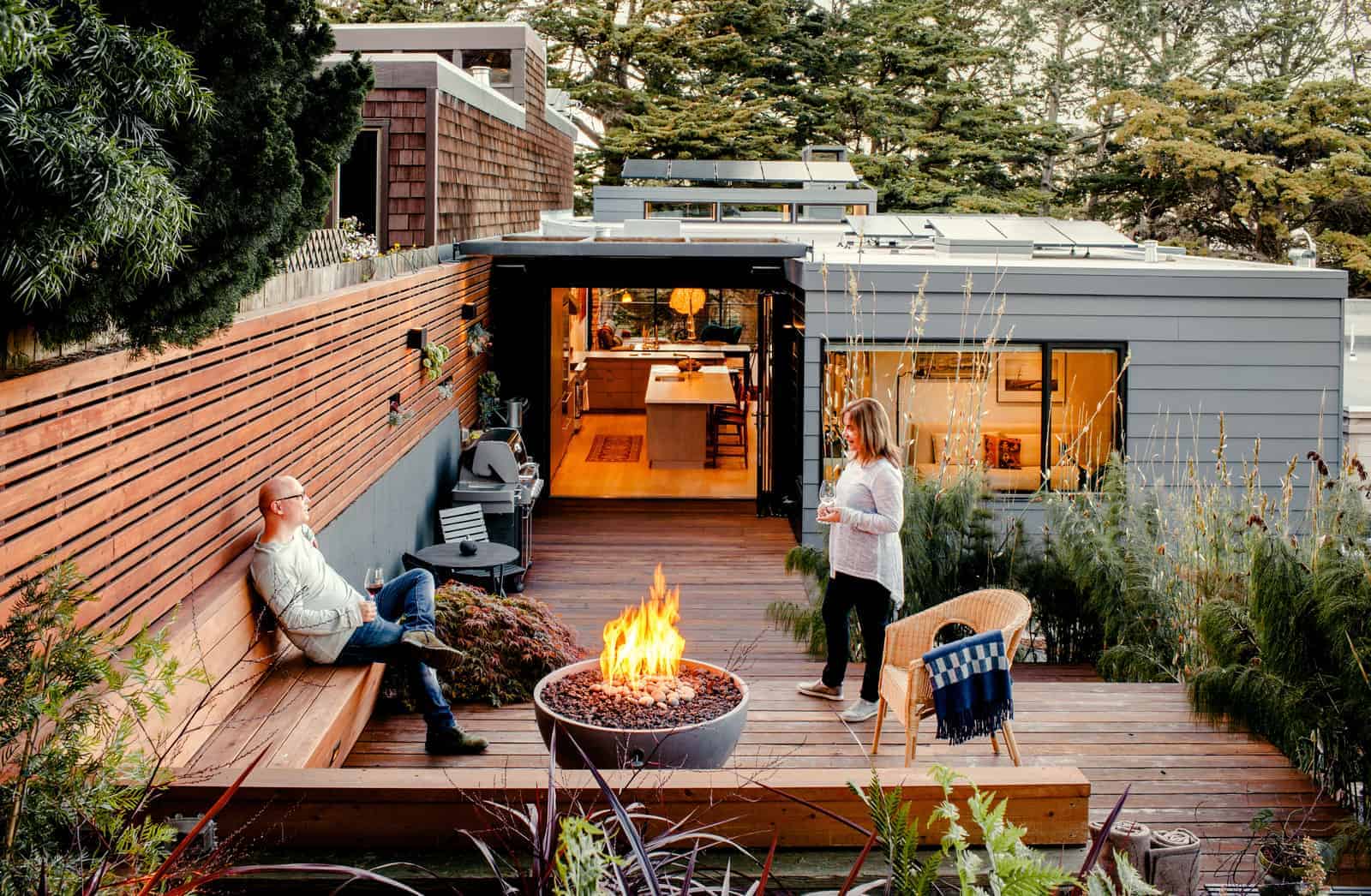
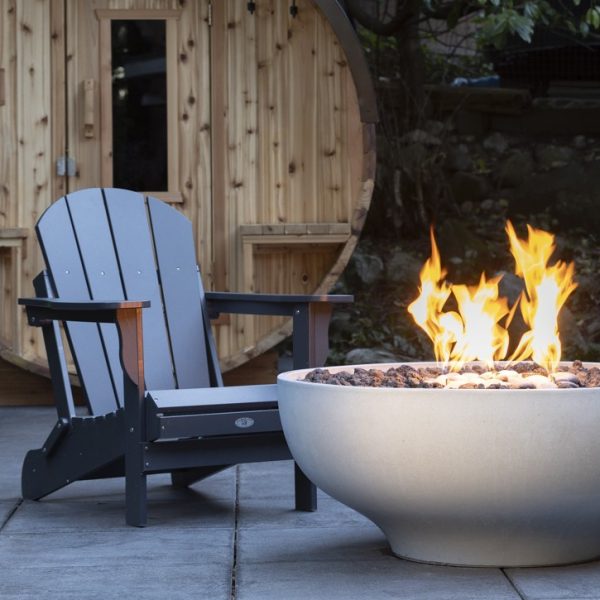



When it comes to adding a fire feature to your home, hotel, or outdoor gathering space, the choices can be overwhelming. One of the biggest divides in the market is handcast concrete firepits versus mass-produced firepits made from lightweight materials or low-cost composites. At first glance, they might look similar. But when you dig deeper, the difference in quality, performance, and longevity is significant.
If you’re investing in a fiery outdoor focal point, it’s meant to last for years—not just a season—understanding these differences can help you choose a firepit that truly delivers on both beauty and durability.
| Feature | Handcast Concrete (Solus Decor) | Mass-Produced (Big Box Retail) |
| Material Quality | Ultra-High Performance Concrete (UHPC) – Has a compressive strength that typically exceeds 150 MPa, which is significantly higher than that of conventional concrete | Lightweight MGO (Magnesium Oxide), GRC (Glass Reinforced Concrete), or Resin composites |
| Construction | 1″ thick, solid-pour structural integrity | Thin-walled, machine-molded shells |
| Durability | Engineered to last 20+ years; weather-resistant | Prone to cracking, peeling, and UV fading |
| Finish & Feel | Smooth, hand-polished, and tactile | Pock-marked, visible seams, or painted-on texture |
| Customization | 12+ colors, multiple sizes, and fuel types and heat outputs | Limited to “one size/color fits all” |
| Environmental Impact | Low waste, small-batch, heirloom longevity | High waste, “disposable” lifecycle (1–3 seasons) |
| Burner Performance | High-BTU, commercial-grade, solid brass components – if needed, replacement components can be bought directly from Solusdecor.com | Lower-heat output, with non-serviceable/replacable burner kits |
| Long-term Value | High initial investment cost but with very low replacement cost | Low initial price but high replacement frequency |
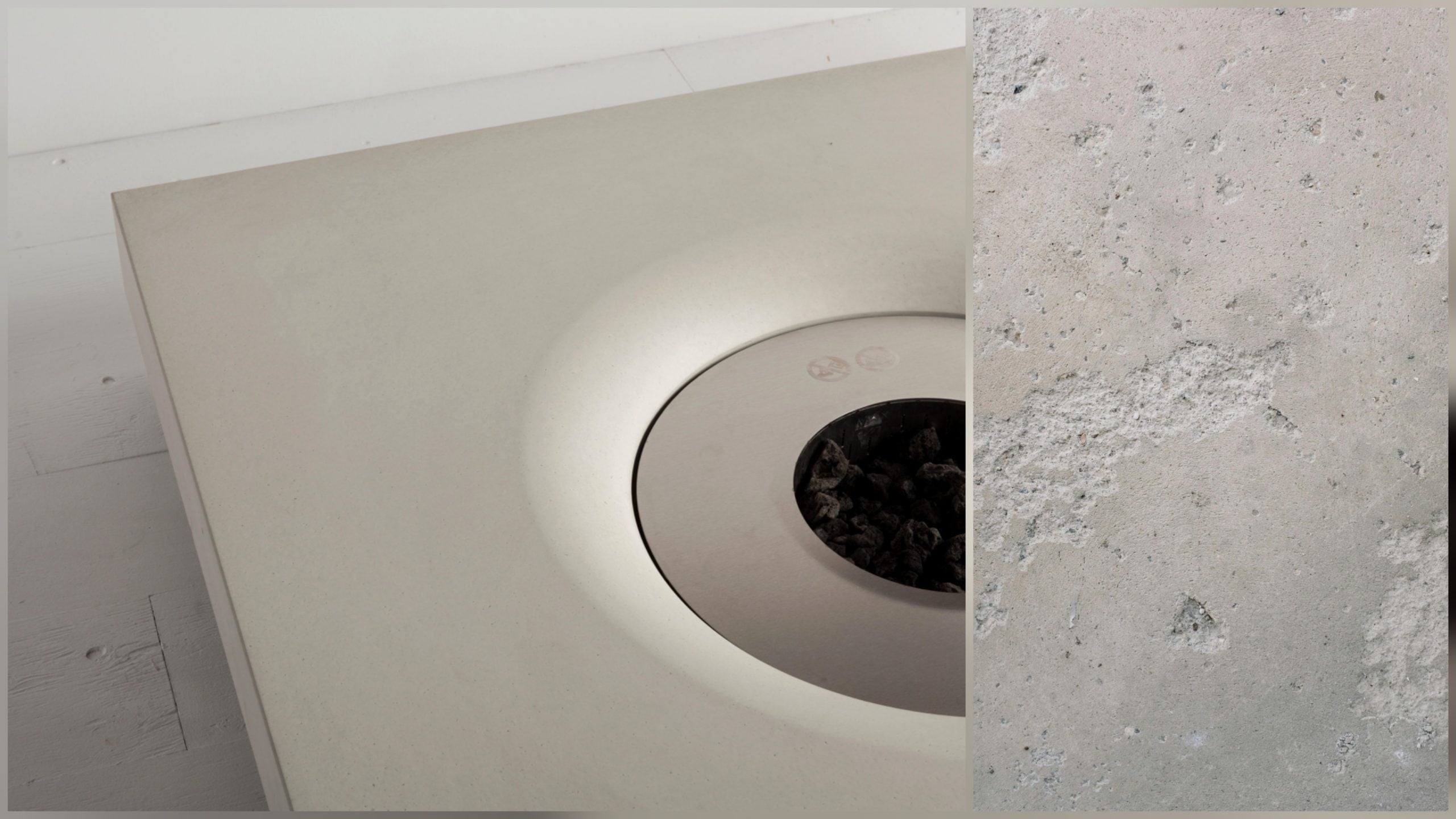
Handcast Firepits
Each handcast firepit manufactured by Solus is carefully created by skilled artisans who mix, pour, polish, and finish the concrete by hand, so you’re getting a piece that’s closer to sculpture than furniture. This craftsmanship results in:
Mass-Produced Firepits
Machine-moulded firepits are made quickly and in high volume. They often use thin concrete blends or lightweight materials designed to ship cheaply. They may look fine on Day 1, but they rarely age gracefully, the result is:
Handcast Concrete (like Solus Decor’s formulation)
Ultra high-performance concrete blends are engineered for strength, longevity, and outdoor durability. They are:
A properly engineered handcast concrete firepit can last decades, even in harsh climates.
Mass-Produced Materials
Many mass-produced models rely on:
Most are not built for long-term exposure to the elements.
Handcast Firepits
Artisanal production allows for:
Designers love handcast options because they integrate seamlessly into curated outdoor spaces.
Mass-Produced Firepits
These often come in:
The focus is on quantity, not individuality.
Handcast Firepits
Brands that handcraft their products offer excellent long-term quality assurance. This is why Solus Decor offers replacement parts and detailed customer support should any problems arise.
Mass-Produced Firepits
Low-cost models are often considered “disposable.” If a burner fails, a finish cracks, or concrete begins to deteriorate, repair options are limited—and replacements may not be available after a year or two.
A handcast firepit is an investment—not just a purchase.
While mass-produced models may be cheaper upfront, they often need to be replaced far sooner. Handcast firepits offer:
Over time, the cost difference narrows dramatically.
Handcast Production
Small-batch manufacturing produces less waste, uses better materials, and focuses on durability (reducing landfill impact). Solus’ handcast firepits are built to last decades, not seasons, meaning they won’t end up in a landfill after only a few uses.
Mass Production
Volume-based production often uses inexpensive materials that degrade quickly, requiring more frequent replacement and creating more waste.
The difference between handcast and mass-produced firepits comes down to craftsmanship, materials, longevity, and overall experience. A handcast firepit, especially one made from ultra high-performance concrete, offers unmatched durability, beauty, and performance that mass-produced models simply can’t replicate.
If you’re designing a luxury outdoor space or investing in a long-lasting focal point, a handcast firepit delivers far greater value and satisfaction in the long run.
TL;DR: The Verdict? Choose mass-produced if you need a temporary solution for a single season. Choose Solus Handcast if you are looking for an architectural centerpiece that increases property value and lasts for decades.